Research Highlights · Faculty Perspective · Indigenous technology · PEEC Laboratory

Programmable Power Supply with built-in process control

A complete, ready-to-use platform for intelligent process control, without expensive PLCs, processors or separate data acquisition systems.

Led byDr. Rupesh WandharePrincipal Investigator, PEEC Laboratory (Power Electronics & Embedded Control) · Electrical Engineering Department, IIT Hyderabad
On this page
Back to Research Highlights

The programmable power supply Developed in the PEEC Lab

The PEEC Lab of the Electrical Engineering Department, IIT Hyderabad, has developed an indigenous programmable power supply with an integrated, versatile closed-loop process control system.

Unlike conventional solutions that require expensive PLCs, processors, and separate data acquisition systems, our technology provides a complete, ready-to-use platform for intelligent process control.

Indigenous · cost-effective · flexible
Configurable controllers

P, PI, PID and advanced control algorithms, plus the flexibility to implement user-developed controllers for research and industrial applications.

Precise control, disturbance rejection

Additional analog channels for feedforward compensation, plug-and-play sensor interfaces and adjustable feedback gains.

Three ways to operate

Configure and run it from the keypad-display, a mobile application or a dashboard.

One platform

No separate PLC, processor or data acquisition system needed.

Inside the programmable power supply: isolated DC-DC converter, SMPS, DC-link capacitors, high-frequency transformer, microcontroller and ESP32 Wi-Fi module
Closed-loop process control with feedforward (Gain K1) and feedback (Gain K2) around the plant

Control structure

The supply takes a 3-phase, 50 Hz, 415 V input and drives a plant with a DC actuator, such as a heating coil, DC motor, electroplating electrodes or lighting. Feedback and feedforward gains act on the process output, and controllers can be P, PI, PID, 2DOF, internal model or a user-invented compensator. An optional GUI interface is available.

See the Android and PC dashboards below.
Technology vision

  • Import substitute for power converters
  • Site-specific solutions with global performance standards
  • Quick turnaround

Technology development

  • Advanced AC-DC / DC-DC converters for 3 kW to 200 kW applications
  • Parallel operation of converters
  • High switching frequency with SiC devices

Applications

  • General-purpose supplies
  • High-capacity chargers
  • Solar PV and fuel cell emulator
  • Bi-directional VFD
  • Process control

PEEC Laboratory Power Electronics & Embedded Control

Power Electronics and Embedded Control Laboratory emblem

Indigenous development of high-frequency link power converters

  • Improving efficiency by employing soft-switching
  • Improved power density with enhanced EMC
  • High conversion ratio for wide input and output range
  • Optimal design for economic and technical benefits
  • Robust control design for various load and source dynamics
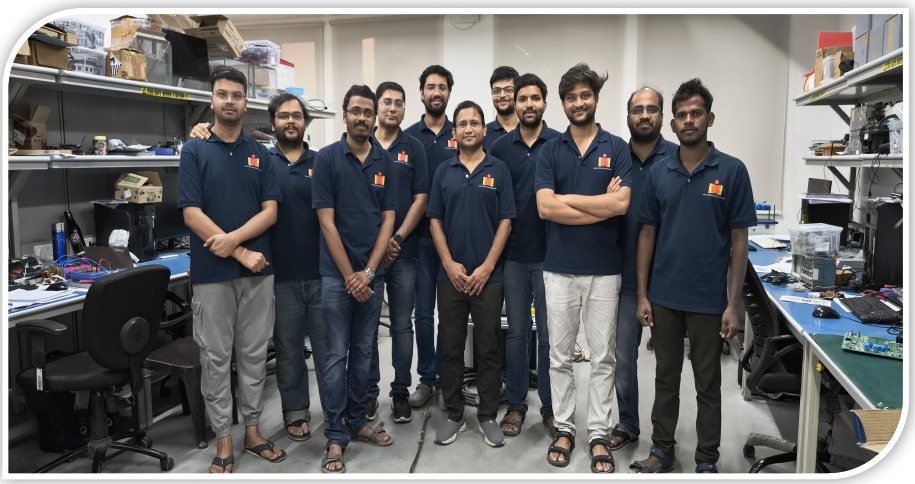
The PEEC Laboratory team
Isolated DC-DC converter: front-end DC-DC converter, inverter and rectifier

Converter research Six projects, with hardware and results

01

High-frequency link DC-DC converter for EV charging

Dual-loop controlled bidirectional CLLLC resonant converter

Indian Patent No. 555037 · 23 January 2024
Fig. 1. Proposed dual-loop controlled bidirectional CLLLC resonant converter
Fig. 2(a). Final hardware prototype
Fig. 2(b). ZVS across the switch
Fig. 2(c). Dynamic response of output voltage (30 V to 70 V)
Fig. 2(d). Dynamic response of output voltage (500 V to 600 V)
Fig. 3. Thermal image of converter in (a) single and (b), (c) dual-loop operation
02

High-frequency link and high step-down DC-DC converter

Hybrid DC-DC converter with zero voltage switching (ZVS), for the EV auxiliary power supply

Indian Patent No. 558777 · 4 June 2024
Hybrid DC-DC converter topology (from main EV battery)
Fig. 4. Proposed hybrid DC-DC converter for EV auxiliary power supply (control)
Fig. 5. Final hardware prototypes with cabinet (96 V/14 V and 307 V/14 V)
Fig. 6. Results: (a) output voltage, (b) ripple in output voltage, (c) transient response
03

Hybrid resistive and converter-based balanced battery storage systems

Cell-level passive balancing plus module-level active balancing, tested on three LiFePO4 modules

Fig. 7. Cell-level passive balancing scheme using the TI BQ769x2 IC
Fig. 8. Isolated multiport hybrid bridge converter based module-level active balancer
Fig. 9. Active modular battery balancing algorithm
Fig. 10. Hardware prototype of hybrid BMS for three LiFePO4 battery modules: (a) BQ79616 passive cell balancer, (b) half-bridge isolated active module balancer
Fig. 11. Experimental results for three cases of module voltages (v1, v2, v3)
04

Bidirectional wireless EV charger

Series-compensated, with integrated PFC and enhanced phase-shift control

Fig. 12. Experimental hardware setup of the WPT system
Fig. 13. Wireless EV charging system with TP-PFC and SSR-FB converter topology
Fig. 14. Closed-loop hardware results of capacitor voltage (v1), coil current (i1) and output voltage (Vo)
05

Hybrid DC bus power supply

Half-bridge isolated DC-DC converter with battery support

Fig. 15. Proposed DC bus power supply
Fig. 16. Half-bridge isolated DC-DC converter
Fig. 17. Experimental results: (a) Vout with a step change from 16 V to 45 V, (b) ripple in Vout at 2 A load, (c) ripple in Vout at 20 A load
06

IoT-based DC-DC converter for wide voltage range applications

Full-bridge isolated DC-DC buck converter with Bluetooth app and PC dashboard

Fig. 18. Full-bridge isolated DC-DC buck converter
Fig. 19. Emulator results at various output-voltage set points, including reference change from 200 V to 100 V and load removal at 150 V
Fig. 20. Android dashboard
Fig. 21. IoT / emulator dashboard (GUI)

Team and outcomes

Research team

PhD scholars
7 ongoing + 1 graduated
PG scholars
6 ongoing + 12 graduated
UG scholars
4 graduated

Research outcomes

Patents
4 granted + 3 filed
Published journals
11
Published conferences
54

Funded projects

Government + industry
2 ongoing + 2 completed
IITH
1 ongoing + 1 completed

Startup From the lab to industry

PEEC Research and Manufacturing Pvt. Ltd

Incubated in iTIC, IIT Hyderabad.

www.peecram.com

Dr. Rupesh Wandhare

Principal Investigator, PEEC Laboratory · Department of Electrical Engineering, IIT Hyderabad

Write to

rupesh@ee.iith.ac.in

PEEC Laboratory · Department of Electrical Engineering · Indian Institute of Technology Hyderabad